Commercial Concrete Repair in Madison, WI — Parking Lot, Sidewalk & Industrial Floor Repair Specialists
Crack and joint repair, parking lot panels, commercial sidewalks and warehouse floors across Dane, Rock, Columbia and Jefferson Counties. Prioritised by what actually needs doing.
Commercial Concrete Repair in Madison, WI
Madison Elite Concrete is your local resource for commercial concrete repair throughout Madison, Dane County and the surrounding area. We help property owners and managers connect with qualified local concrete specialists who prioritise repairs rather than quoting everything at once.
On a commercial property the question is rarely whether concrete is damaged. Walk any lot built more than fifteen years ago and you will find cracking, joint deterioration and a few settled sections. The real question is which of those need addressing this budget year, which should be programmed for next, and which are cosmetic and can be left, and that requires an assessment with reasoning attached rather than a list of everything visible. A proposal that quotes every defect on a property is easy to produce and nearly useless for planning capital.
The prioritisation criteria are reasonably objective. Anything presenting a trip or safety hazard on a route the public uses comes first, because that is liability rather than maintenance. Anything deteriorating progressively — joint edges breaking down under wheeled traffic, spalling that has reached reinforcement, water getting into a base — comes next, since those get more expensive on a predictable schedule. Cosmetic damage on sound concrete comes last and often should not be done at all. What makes this work well is a contractor willing to say a section is fine, and to explain what they are seeing when they say a section is not.
What’s Included in a Madison Commercial Concrete Repair Quote
- A walked condition assessment producing a prioritised list with reasoning, not an inventory of every defect
- Diagnosis distinguishing surface deterioration, structural cracking, joint failure and loss of subgrade support
- Identification of underlying causes — drainage, under-built sections, subgrade saturation — that repairs alone will not fix
- A phasing plan keeping the property operational, with pedestrian and vehicle routing agreed before mobilization
- Saw-cutting to clean boundaries on partial removals so remaining concrete is left with a sound vertical edge
- Full-depth panel replacement where damage goes through the slab, taken to existing joints
- Partial-depth repair of spalled areas, with unsound material removed back to solid concrete and edges cut square
- Crack routing and sealing with materials matched to whether the crack is static or moving
- Joint cleaning, repair of spalled joint edges, and refilling with material appropriate to the traffic
- Assessment and correction of drainage where water is causing the deterioration
- Site protection, barricading, cleanup, and coordination with striping or line marking where affected
Commercial Concrete Repair in Madison, WI
Commercial Concrete Crack Repair
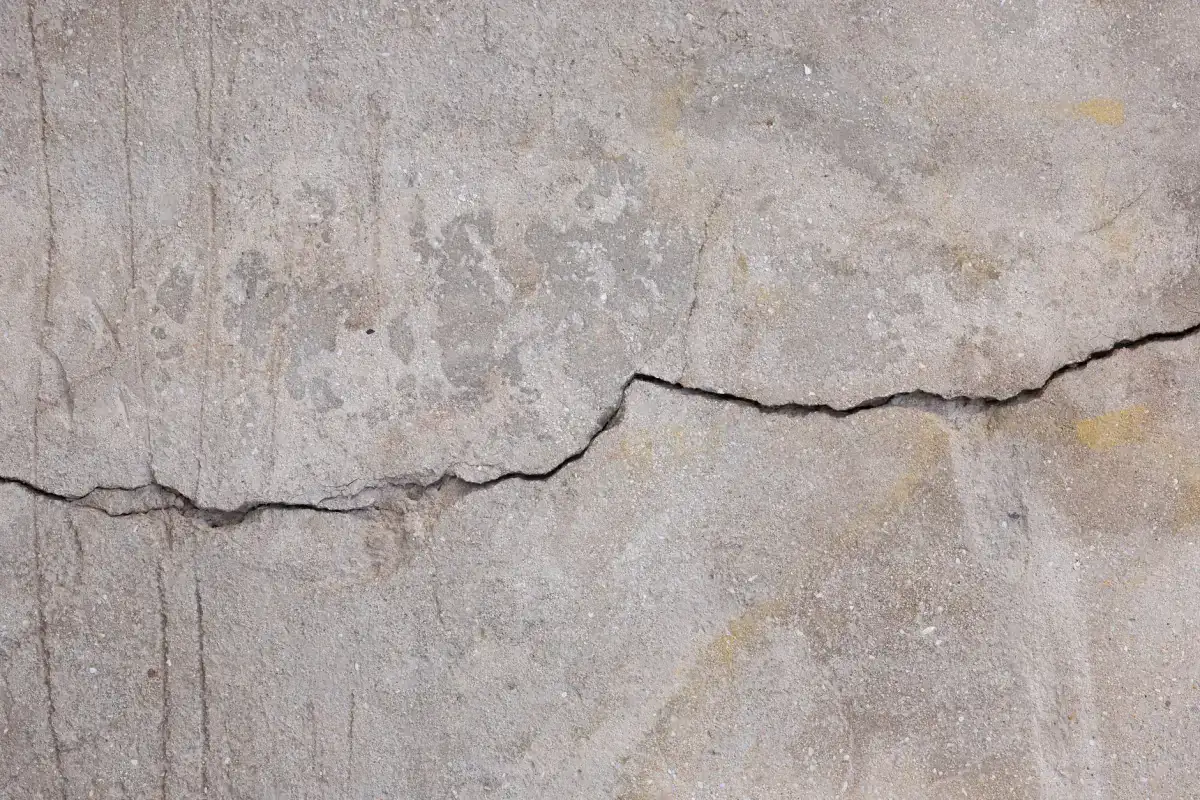
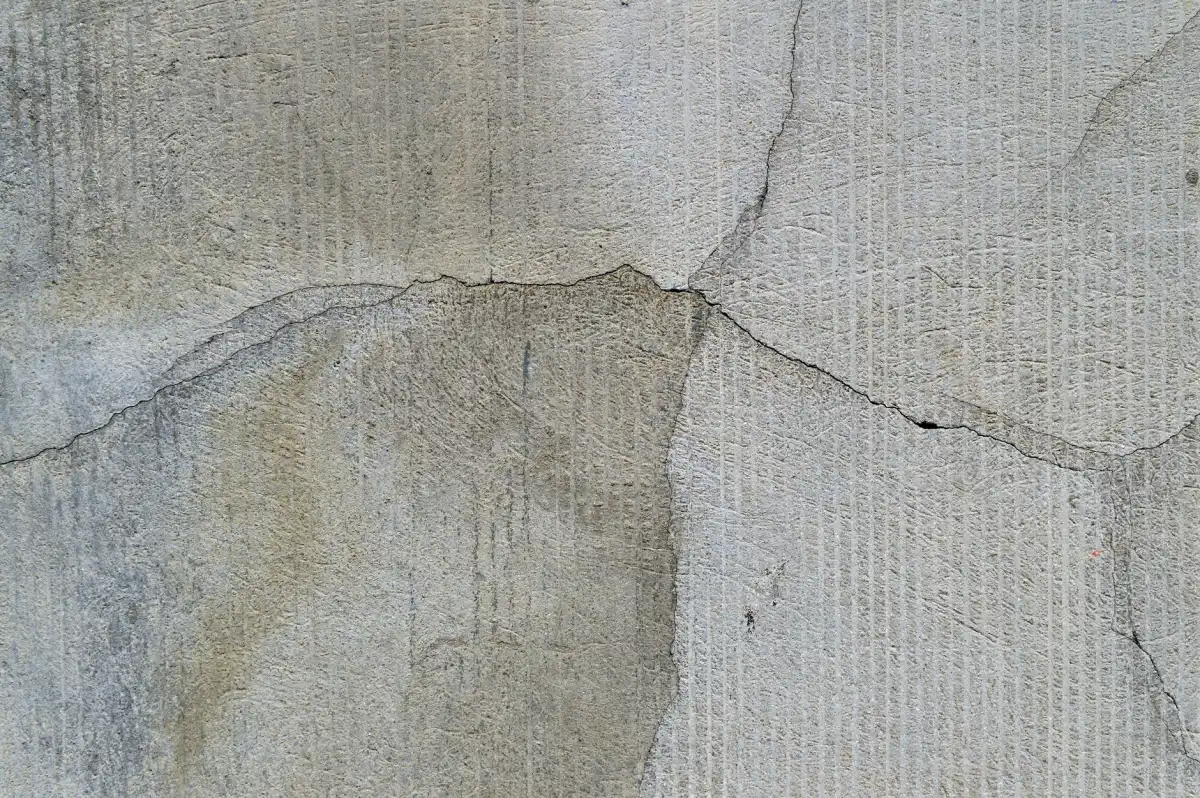
Diagnosis first, because the repair depends entirely on what kind of crack it is. A static crack, level on both sides and stable in width across seasons, can be routed and sealed with a rigid material, and that keeps water and de-icing brine out of the base — genuinely worthwhile on a commercial surface. A crack that opens and closes seasonally needs a flexible sealant that accommodates movement, or a rigid filler will simply crack again alongside it. A crack with vertical displacement across it is a different problem entirely: the slab has lost support, and sealing it leaves the void doing exactly what it was doing before. On surfaces carrying hard-wheeled traffic, a displaced crack also destroys itself progressively as wheels hammer the raised edge.
Parking Lot Concrete Repair
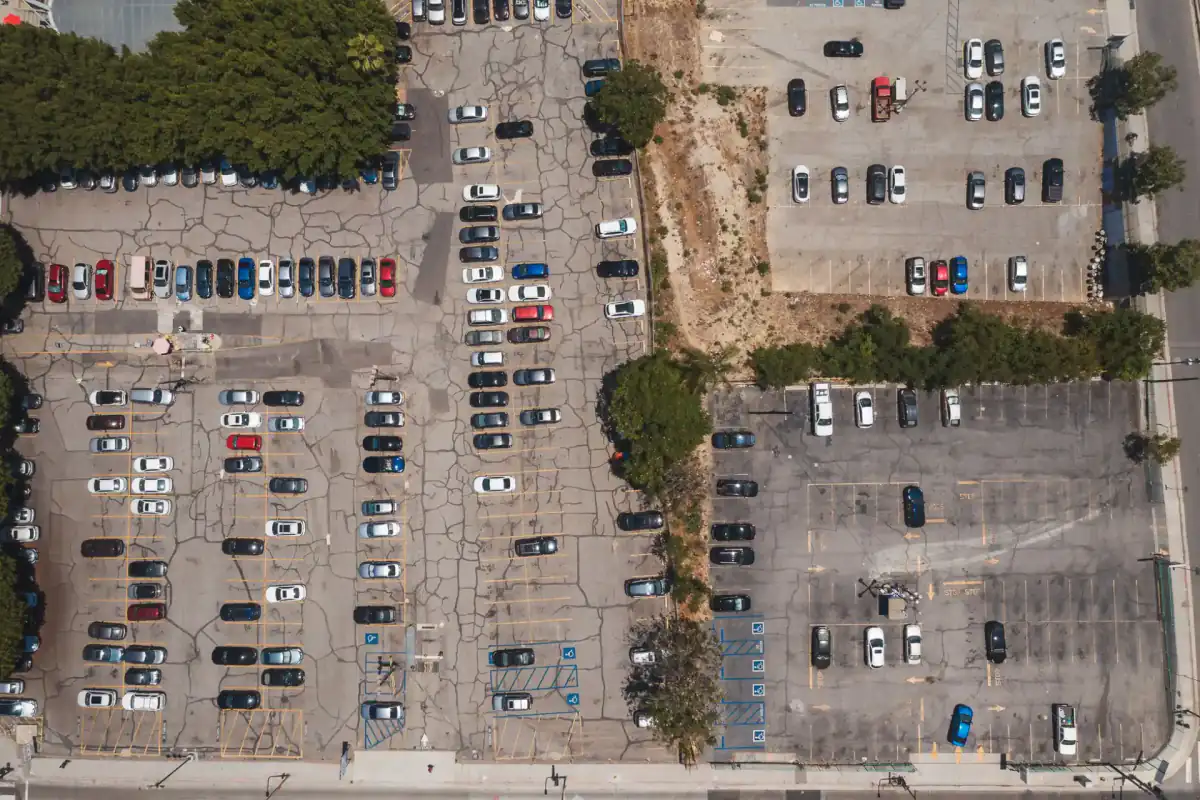
Failures on a lot cluster in predictable places: where trucks turn, in front of the dumpster enclosure, at the dock apron, and in the low corner that holds water. That clustering is diagnostic — it means those areas were built lighter than the loads they ended up carrying, or that water has been undermining them. Repair is generally by full-depth panel replacement taken to existing joints, since a partial patch in a panel under vehicle traffic does not last. The important decision is whether the replacement panel gets the original specification or a heavier one. Rebuilding a failed truck turn to the section that already failed once is a decision worth questioning, and the incremental cost of a thicker, dowelled panel in that location is small relative to doing it twice.
Commercial Sidewalk Repair
Trip hazards first. A height difference between adjoining slabs on a route the public uses is a liability that exists every day until it is addressed, and it usually has two possible answers. Where the concrete is sound and has simply settled, lifting removes the displacement quickly, cheaply and with minimal disruption to the property. Where the slab is broken, spalled or has lost support across its area, replacement is the answer, saw-cut at existing joints so the remaining concrete keeps a clean edge. Frontage sidewalk brings the jurisdictional question: sections in the public right-of-way are governed by the City of Madison, which requires contractors performing that work to be prequalified and permits it through the Engineering Division.
Warehouse & Industrial Floor Repair
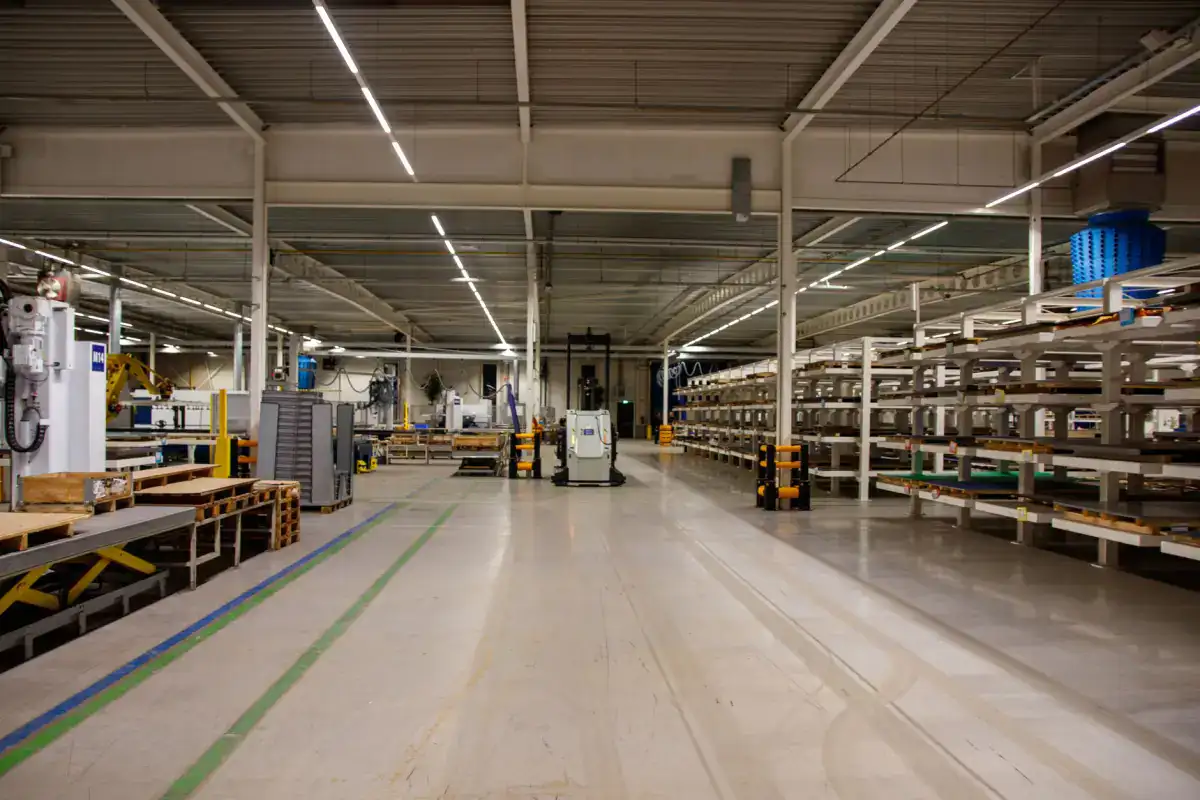
Interior floor repair is dominated by joints. Joint edges are the weakest part of any floor under hard-wheeled traffic, and once an edge starts breaking down the deterioration accelerates because each wheel impact removes more material. The standard remediation is to cut back the damaged edge to sound concrete, rebuild it with a suitable repair material, and fill the joint with a semi-rigid product that supports both edges — which is also what should have been there originally. Beyond joints, the common issues are surface abrasion and dusting in traffic lanes, cracks with displacement, and localised failures under rack posts or equipment. Repair inside an operating building brings its own constraints: dust containment, cure times that fit around operations, and sections taken out of service in sequence.
Damaged Concrete Removal & Replacement
Where repair has stopped being the right answer. That threshold is reached when a section has already been repaired more than once, when cracking runs through the slab in several directions, when spalling has reached and exposed corroding reinforcement, or when the underlying cause is a base or drainage failure that no surface work addresses. Corroding steel is worth singling out, because it does not stabilise — corrosion products expand and continue pushing concrete off from the inside, so patching over it buys a short delay at full price. Replacement is also the only opportunity to correct the section, the base and the drainage together, which is why a replacement panel in a failure-prone location should generally be built heavier than the one it replaces.
Repair vs. Section Replacement on Commercial Concrete
Repair and Maintain
Right where the concrete is fundamentally sound and the problems are joints, surface deterioration or localised damage. Joint filling and crack sealing in particular are high-value maintenance on a commercial property, because they keep water and de-icing brine out of the base — and the base is what the pavement depends on. Cheaper, faster, and far less disruptive to operations.
Replace Sections
Right where damage goes through the slab, where a section has been repaired repeatedly, where reinforcement is corroding, or where the area was under-built for the traffic it carries. Replacement lets the section, the base and the drainage be corrected together. More disruptive and more expensive, and the only option that resolves the cause.
Signs You Need Commercial Concrete Repair
- Height differences between slabs on any route the public or staff walk, which is liability rather than maintenance
- Joint edges spalling and breaking down under forklift, truck or hard-wheeled traffic
- Panels cracked through with vertical displacement, particularly in drive aisles and truck turns
- Water ponding where it used to drain, meaning a section has lost its slope or the drainage has failed
- Spalling that has exposed reinforcing steel, which does not stabilise on its own
- The same area being repaired for the second or third time in a few years
How Commercial Concrete Repair Works
- 1
Condition Assessment and Prioritisation
The property gets walked and the defects get sorted rather than simply recorded. Safety hazards on public routes come first, because those represent exposure that exists every day until addressed. Progressive deterioration comes next — joint edges breaking down, spalling reaching reinforcement, water getting into a base — since these get measurably more expensive on a predictable timeline. Cosmetic damage on structurally sound concrete comes last, and frequently the honest recommendation is to leave it. Each item gets a diagnosis attached: what kind of failure it is, what caused it, and what happens if it waits a year. That last part is what makes the assessment useful for capital planning, because a property manager needs to know which line items are deferrable and which are not.
- 2
Diagnosis and Cause Identification
Before any repair method is selected, the failure mechanism gets established, because surface deterioration, structural cracking, joint failure and loss of subgrade support look similar from a distance and need completely different work. Cracks are assessed for displacement and for movement. Slabs are checked for rocking, which indicates voids beneath. Surfaces are sounded for delamination, which frequently looks intact from above. And the site is walked for the cause, which on commercial property is most often water — a downspout discharging onto pavement, a failed inlet, a section that ponds, or a grade that directs runoff under a slab. Repairing concrete while leaving the water in place produces a repair with a countdown attached, and that should be said plainly in the proposal.
- 3
Preparation and Repair Execution
Repairs fail at the boundary far more often than in the middle, so preparation is most of the work. Unsound concrete is removed back to solid material, because patching over delaminated concrete relocates the failure rather than fixing it. Edges are saw-cut square rather than feathered, since a feathered edge is thin and breaks away first. Exposed corroding reinforcement is addressed rather than covered. Full-depth panel replacement is taken to existing joints so the new work meets the old on a proper line. Cracks are routed to a consistent reservoir and filled with material matched to whether they move. Joint repair means cutting back the damaged edges, rebuilding them, and refilling with a semi-rigid material that supports both sides under wheel loads. All of it is phased so the property keeps operating.
- 4
Drainage, Joint Sealing and Documentation
Where water was identified as the cause, it gets addressed — an inlet cleared or reset, a discharge relocated, a low area regraded — because otherwise the repair is temporary regardless of how well it is executed. Joints across the repaired area and often beyond it are cleaned and sealed, which on commercial concrete is among the highest-value maintenance available: sealed joints keep water and de-icing brine out of the base, and base saturation is behind a large share of pavement failure in this climate. The work is documented for the property's records, including what was found during removal, since that information matters for the next capital cycle. Where striping or line marking was affected, it is coordinated and reinstated once the concrete has gained strength.
What Does Commercial Concrete Repair Cost in Madison, WI?
- The mix of repair types, since crack sealing, joint repair, partial-depth patching and panel replacement price very differently
- Total area and the number of discrete locations, because scattered small repairs cost more per unit than a concentrated area
- Whether reinforcement is exposed or corroding, which adds preparation and can change the approach
- Phasing requirements to keep the property operational, meaning multiple mobilizations
- Out-of-hours or weekend scheduling where the area cannot be closed during business hours
- Access constraints, particularly for interior floor repair inside an operating building
- Whether the underlying cause — drainage, an under-built section, subgrade saturation — also has to be corrected
- Right-of-way scope, which brings prequalification, permitting and restoration requirements
The most useful thing to compare between commercial repair proposals is not price but the assessment behind it. Two contractors walking the same property can return a list of forty items and a prioritised list of eight, and the second is more valuable even at a similar total. Ask what each item is expected to cost you if deferred a year, what caused the failure, and whether the proposed repair addresses that cause or only its symptom. A proposal with a genuine prioritisation and honest deferral guidance is a capital planning tool. One that quotes every defect is a sales document.
What to Look for in a Madison Commercial Concrete Repair Contractor
A Prioritised List, With Reasoning
Safety hazards first, progressive deterioration second, cosmetic last. Each item should come with what caused it and what happens if it waits. That is what makes an assessment useful for a capital plan rather than just for a quote.
Willingness to Say a Section Is Fine
Cracked concrete is not automatically failed concrete. A contractor who tells you which defects can be left alone is giving you information you can act on, and is more credible on the ones they say cannot.
The Cause Addressed, Not Just the Damage
Most commercial concrete failure traces back to water or to a section built lighter than the traffic it carries. A repair that ignores the failed inlet or rebuilds a truck turn to the spec that already failed is a repair with an expiry date.
Joint Sealing Treated as Real Maintenance
Sealed joints keep brine and water out of the base, and base saturation is behind a large share of pavement failure here. It is unglamorous, inexpensive, and one of the highest-return items on a commercial property.
Residential & Commercial Commercial Concrete Repair
Residential
Multi-family and condominium properties are assessed the same way as commercial ones — walkways, drive aisles, resident parking and refuse areas prioritised by hazard and by rate of deterioration — with the added constraint that residents are on site continuously and routes have to stay open at night.
Commercial
Retail, office, industrial and institutional properties across Dane County and the surrounding counties, working with property managers and facility teams on prioritised assessments, phased execution and documentation that supports the next capital cycle.
When Commercial Concrete Repair Isn’t the Right Call
- If the concrete is cracked but level, stable and not spalling, it does not need work. Cracking is what concrete does, and money spent here is money not spent on the sections that present actual hazards.
- If a section has already been repaired twice and failed twice, a third repair is a partial payment toward the replacement you will end up doing. Ask for the replacement number so you can compare properly.
- If the cause is a drainage failure, fixing the concrete without fixing the water buys a delay at full price. That drainage work may sit outside a concrete scope and should be resolved first.
- If a structural element is involved — a building slab showing distress, a retaining structure, a foundation — that needs a structural engineer before any contractor quotes repair work.
- If the property is outside Dane, Rock, Columbia and Jefferson Counties, a contractor closer to you will mobilize more efficiently, which matters on scattered small repairs.
Frequently Asked Questions
- How do we decide which concrete repairs to do this year?
- By hazard first, then by rate of deterioration, then by appearance. Anything presenting a trip or safety hazard on a route the public uses is liability that exists every day until addressed, so it goes first regardless of cost. Progressive failures come next — joint edges breaking down, spalling that has reached reinforcement, water getting into a base — because these get more expensive on a predictable timeline. Cosmetic damage on sound concrete is genuinely deferrable and often should be deferred indefinitely. A good assessment tells you which category each item is in.
- Why do the joints in our parking lot keep failing?
- Two usual causes, often together. If the joints are unsealed, water and de-icing brine get into the base beneath the pavement, and a saturated base is behind a large share of pavement failure in a freeze-thaw climate. Separately, if there is no load transfer across the joint, adjacent panels deflect independently as a heavy wheel crosses, which hammers both edges until they break down. Joint cleaning, edge repair and refilling with a semi-rigid material is one of the highest-return maintenance items available on a commercial lot.
- Can we repair a warehouse floor without shutting down operations?
- Usually yes, with sequencing. Floor repair is generally done in sections with areas taken out of service in turn, and the constraints are dust containment, cure times that fit around your operating hours, and keeping equipment routes viable. Joint repair in particular lends itself to phased work because it follows linear runs. Where the cure schedule is the binding constraint, rapid-setting repair materials can shorten the out-of-service window considerably at higher material cost — a legitimate trade to price against the cost of the downtime.
- Is it worth repairing concrete with exposed rebar?
- Only if the corroding steel is properly addressed rather than covered. Corroding reinforcement does not stabilise on its own — corrosion products occupy more volume than the original steel, so they continue pushing concrete off from the inside, and a patch placed over rusting bar fails from behind. Proper repair means removing concrete back past the corroded section, treating or replacing the steel as required, and rebuilding with an appropriate material. Where corrosion is extensive, full-depth replacement of the section is usually both more durable and cheaper over any realistic timeframe.
- Should we replace failed parking lot panels with the same specification?
- Often not, and this is worth raising explicitly. Failures cluster where trucks turn, at dock aprons and around dumpster enclosures, and that clustering usually means those areas were built lighter than the loads they ended up carrying. Rebuilding to the specification that already failed once reproduces the failure on the same schedule. A thicker, dowelled panel in a known failure location costs marginally more than a like-for-like replacement and lasts considerably longer, which makes it one of the easier decisions on a commercial property.
- How long should a commercial concrete repair last?
- It varies by repair type, and any contractor should give you a realistic figure for the specific work rather than a general reassurance. A full-depth panel replacement on corrected base should last like new concrete. A sealed joint has a maintenance interval and will need attention again. A partial-depth patch in a heavy-traffic area has one of the hardest jobs in concrete repair. The honest version of the answer names the expected life and tells you which items are maintenance cycles rather than permanent fixes, so they can be budgeted as recurring.
Learn More
- ACI PRC-330 — Commercial Concrete Parking Lots and Site Paving — ACI's guide to parking lot design and construction, including joint design and durability considerations that explain most commercial pavement failures.
- NRMCA — CIP 2: Scaling Concrete Surfaces — Why concrete surfaces deteriorate, and the role de-icing chemicals play on any commercial surface treated through a Wisconsin winter.
- American Concrete Institute — The standards body behind concrete repair guidance, including surface preparation, repair material selection and durability requirements.
Need Commercial Concrete Repair in Madison, WI?
Tell us what’s going on and get an on-site estimate — no charge for the visit, and no obligation to book the work.
Get My Free Estimate