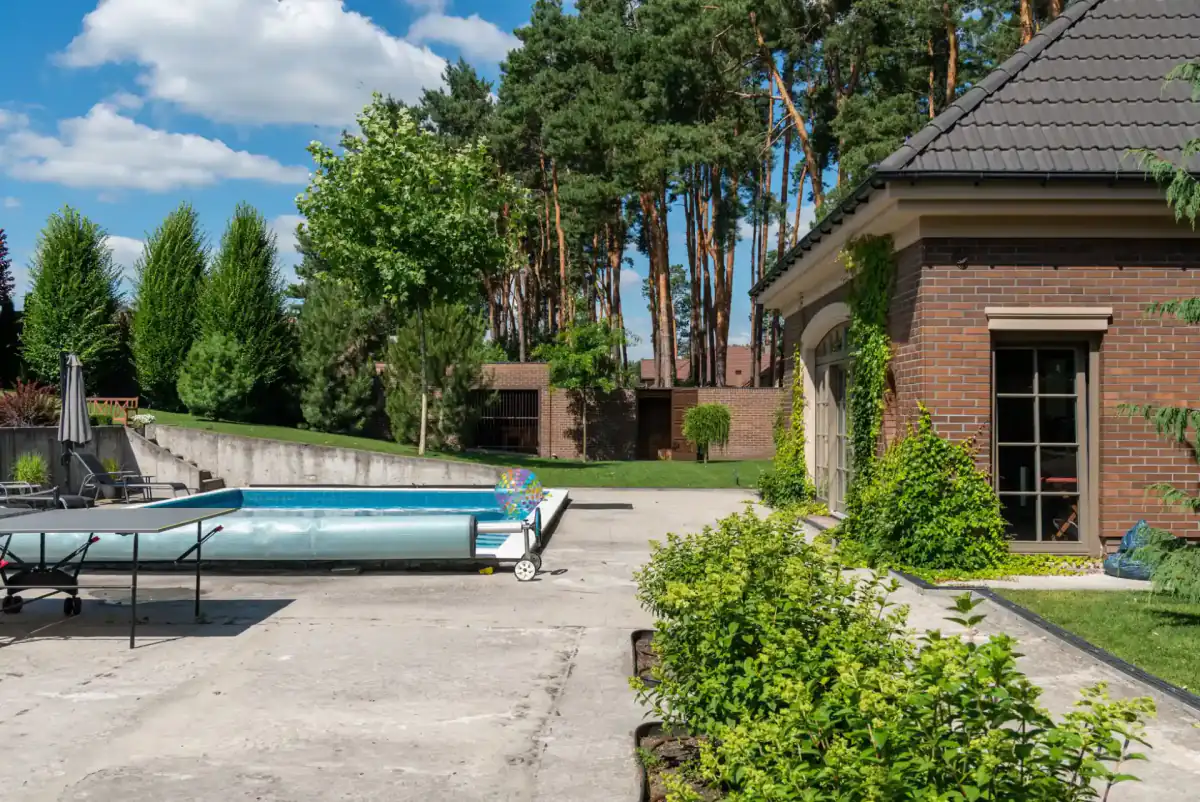
Decorative Concrete in Madison, WI — Residential & Commercial Decorative Finish Specialists
Colored concrete, exposed aggregate, salt and textured finishes, borders and custom patterns across Dane, Rock, Columbia and Jefferson Counties.
Decorative Concrete in Madison, WI
Madison Elite Concrete is your local resource for decorative concrete throughout Madison, Dane County and the surrounding area. We help homeowners connect with trusted decorative concrete finishers who treat the base and the joint layout as part of the design.
Decorative concrete is the whole category of finishes that make a slab look like something other than grey flatwork: integral colour, colour hardener, exposed aggregate, salt finish, textured and broomed patterns, saw-cut scoring, and borders or bands that break a large pour into readable sections. Stamping is part of this family and has enough distinct demand to warrant its own page, so this one covers everything else — the colour and texture side rather than the pattern-imprinting side.
Everybody has an opinion about the colour. Nobody has an opinion about the base, which is the part that decides how long they get to keep the colour. That is not a joke about homeowners so much as a description of where decorative projects go wrong. A decorative finish is a surface treatment on a structural element, and it inherits everything the structure does. A coloured slab on an uncompacted base is a coloured slab that cracks, and a crack across integral colour is more visible than the same crack in grey. Two things follow. Base and joint layout get the same attention on a decorative pour as on any other, and the sealer schedule is part of the purchase rather than an optional extra, because the colour lasts exactly as long as the sealer does.
What’s Included in a Madison Decorative Concrete Quote
- Colour and finish selection reviewed outdoors in daylight, against the house and any existing hardscape
- A joint layout planned as part of the design, so saw cuts read as deliberate rather than accidental
- Excavation, stripping of organics, and subgrade compaction in lifts
- Dense-graded base course to a depth set by the soil and the use of the slab
- Forming to finished elevations and drainage slope, verified before concrete is ordered
- Fiber mesh or #4 rebar on chairs, specified for the slab size, the load and the ground
- Air-entrained mix appropriate to Wisconsin freeze-thaw exposure, with slump controlled at the truck
- Integral colour batched at the plant, or colour hardener worked into the surface, as specified
- Exposed aggregate, salt finish, textured broom or scored finishes applied to the agreed detail
- Borders, bands or contrasting perimeter treatments formed and finished as part of the layout
- Sealer applied at the manufacturer's rate, with the resealing interval provided in writing
Decorative Concrete Services in Madison, WI
Colored Concrete
Two methods, and they are genuinely different products rather than two routes to the same result. Integral colour is batched into the concrete at the plant, so the colour runs through the full depth of the slab — a chip or a saw cut does not reveal grey underneath, and the colour weathers evenly because there is no thin coloured layer to wear through. It is more muted than the alternative, and the entire load has to be correct because nothing can be adjusted once it is on site. Colour hardener is broadcast onto the floated surface and worked in, producing a denser, harder and considerably more saturated surface, but the colour lives in the top layer and deep damage exposes what is beneath. On a slab that will take salt and plow blades, integral colour ages more gracefully. On a sheltered patio where saturation matters, hardener has the edge.
Textured Concrete Finishes
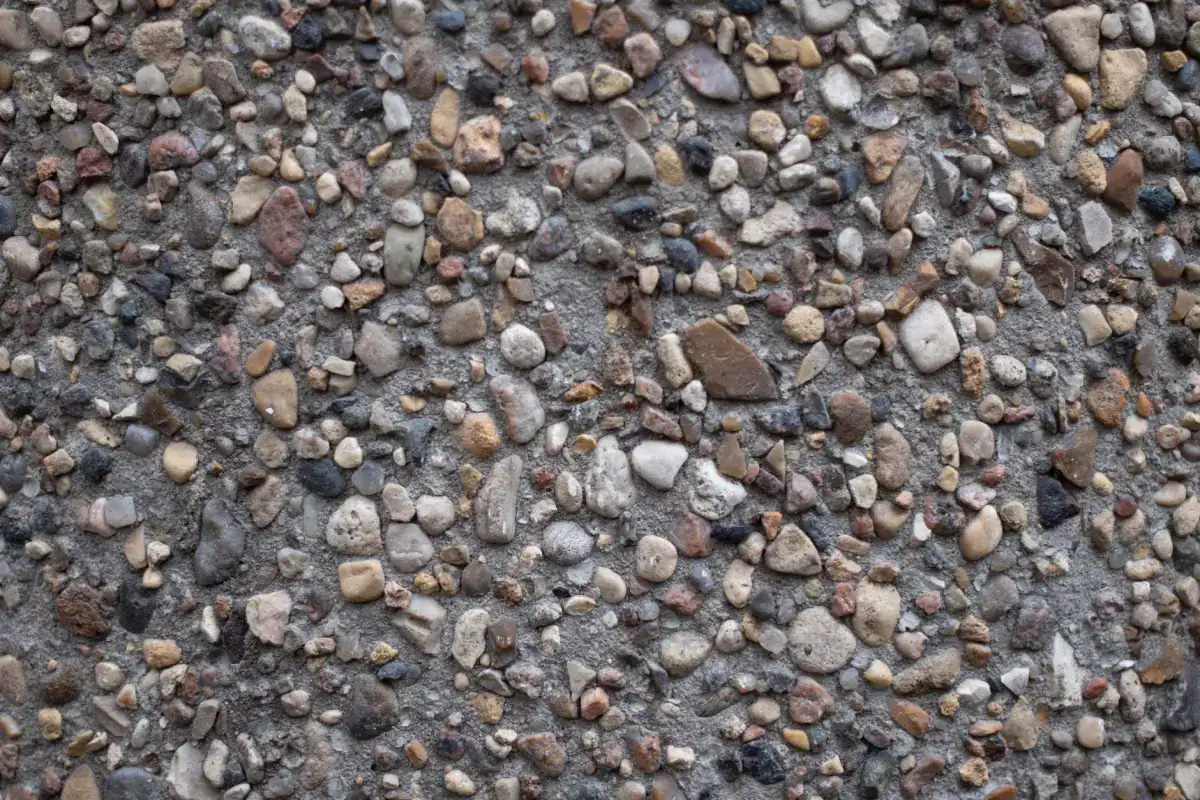
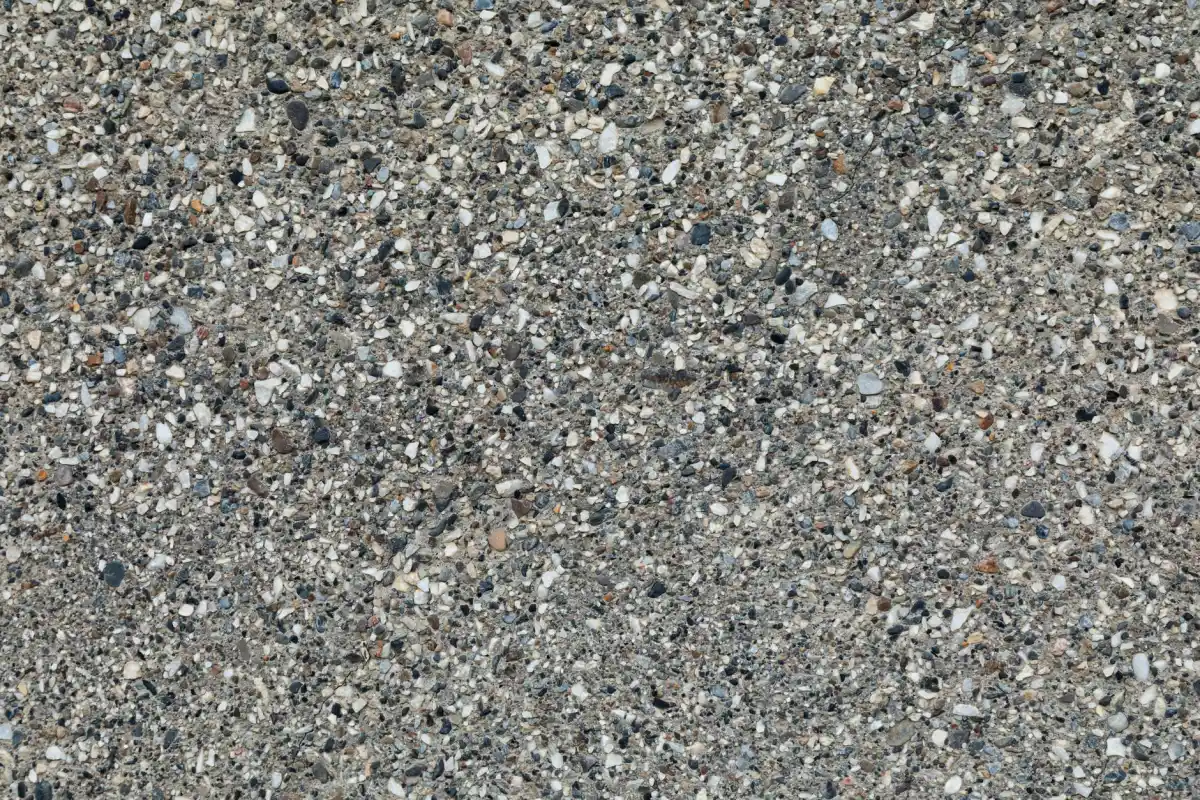
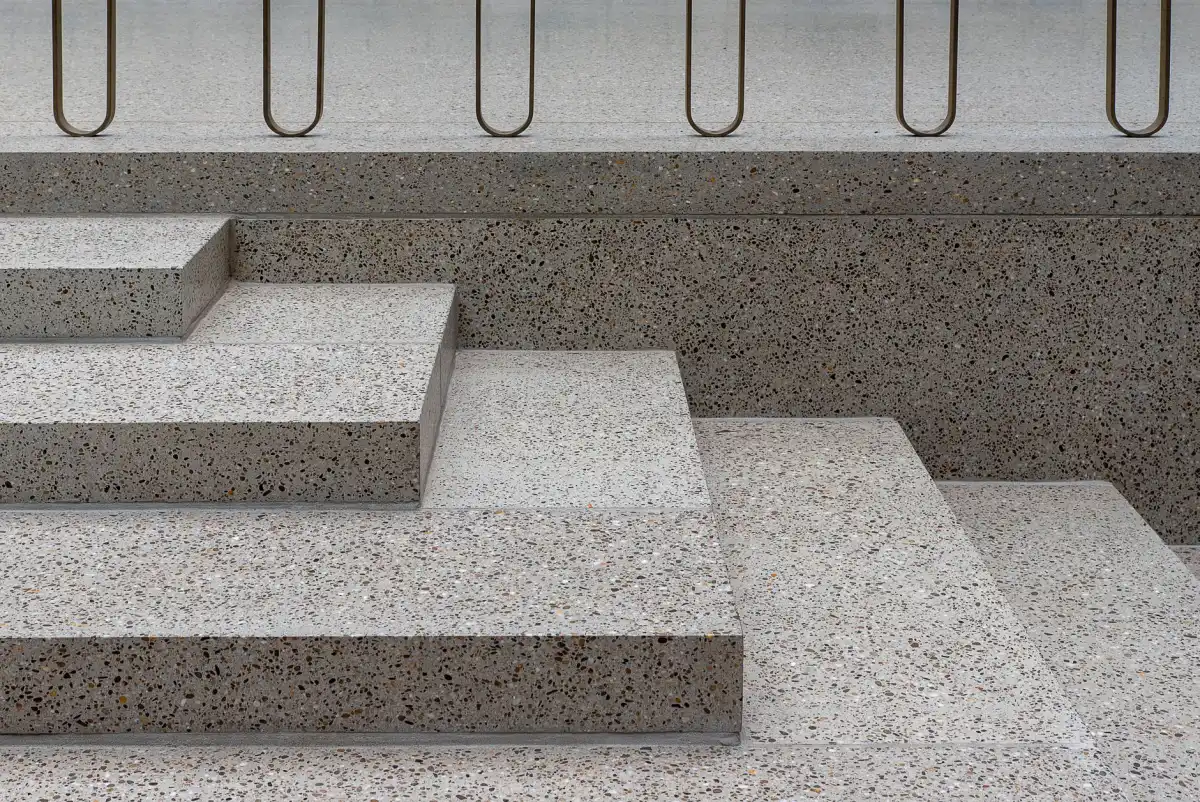
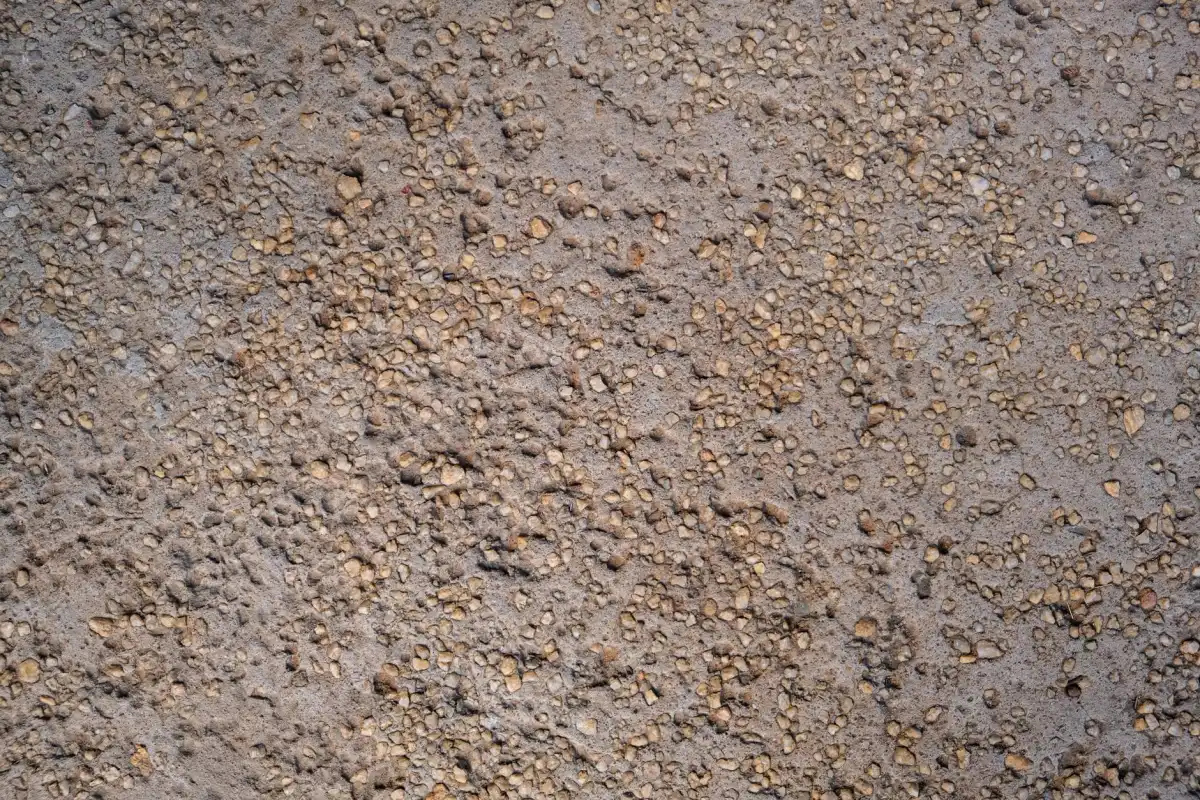
Texture is what a slab feels like underfoot and how it handles water, and in this climate that outranks appearance. A broom finish is the workhorse, and the direction it runs is a real decision — across the path of water so the texture sheds rather than channels. Exposed aggregate washes the surface paste away to reveal the stone in the mix, giving excellent traction, hiding wear and staining well, and producing a surface that looks better at ten years than most alternatives. A salt finish presses coarse salt into the plastic surface and washes it out, leaving a pitted texture that reads as informal and gives grip. Smooth steel-troweled finishes belong indoors — outdoors in Wisconsin they are slick in exactly the conditions where traction matters most, and no amount of sealer improves that.
Decorative Concrete Patios
Patios are the most common decorative application because they are seen at close range and from indoors, and because the light traffic means a wider range of finishes will survive. The decisions that matter most are scale and restraint. A single decorative treatment done well — integral colour with a broomed field and a contrasting border, say — reads as considered. Three treatments competing on one slab reads as a sample board. Traction deserves attention even on a patio, since it will be walked on in February and a heavily sealed smooth surface is genuinely slippery. And drainage governs regardless of finish: the slope away from the house is set before anyone chooses a colour, because a decorative patio that drains toward the foundation is still a drainage problem.
Decorative Concrete Walkways
Front walks are the most-looked-at concrete on a property, which makes them a sensible place to spend on finish. The width is the constraint. A walk is narrow, so large-scale treatments do not have room to read properly, and the finishes that work best are those that do not depend on scale — integral colour, exposed aggregate, a salt finish, or a contrasting border running the length of the walk with a plain field between. Saw-cut scoring is particularly effective here, because a walk needs control joints anyway and turning them into a deliberate pattern gets the design for free. Traction is not optional on a walk. Whatever finish is chosen, it needs to work when it is wet and near freezing, which usually means texture rather than gloss and a grit additive in the sealer.
Custom Concrete Patterns & Borders
Borders, bands, inlays and saw-cut patterns that give a large slab structure. This is the most cost-effective decorative work available, because it changes how a slab reads without changing what it is made of. A contrasting border around a patio or up a driveway defines the edge and makes a large expanse look intentional. Saw-cut scoring in a grid or diagonal pattern turns necessary control joints into the design — the cuts have to be there anyway, so placing them deliberately costs nothing beyond the layout time. Inlays and banding in a second colour or a different texture break up long runs. The discipline is knowing when to stop. A border, a field and one change of texture is usually the most a slab can carry before it starts to look busy rather than designed.
Integral Color vs. Color Hardener
Integral Color
Batched into the concrete at the plant so colour goes through the full slab depth. Chips and saw cuts do not expose grey, and the surface weathers evenly with no thin coloured layer to wear through. More muted, and it cannot be adjusted on site. The better choice on driveways and anywhere salt and plow blades are part of life.
Color Hardener
Broadcast onto the floated surface and worked in, giving a denser, harder, more saturated finish with a wider colour range. Because the colour lives in the top layer, deep damage exposes the concrete beneath. Best on sheltered patios and walks where saturation matters more than abrasion resistance at depth.
Signs You Need Decorative Concrete
- A large expanse of plain grey concrete that looks institutional next to a house that has been renovated
- A new patio, walk or drive being poured anyway, where the incremental cost of a decorative finish is worth pricing
- Existing coloured concrete that has faded, gone chalky or worn through in traffic areas — usually a sealer question
- A slab that is slippery when wet, where a textured or exposed aggregate finish would fix a real safety issue
- A long driveway or wide patio that needs visual structure, where borders or scoring would do the work
- Hardscape elements around the property that do not relate to each other and would benefit from a shared finish
How Decorative Concrete Works
- 1
Finish Selection and Layout Design
Decorative work is designed before it is excavated. Colour gets looked at outdoors, in daylight, against the actual house and any existing hardscape — a sample viewed under indoor light is misleading, and colour that looks warm on a sample board can read quite differently against grey siding on an overcast November afternoon. The finish gets matched to the exposure, which in Wisconsin means asking how much salt and how much wet-weather foot traffic the surface takes before asking how it looks. Then the layout: where the borders run, where the field changes texture, and critically where the control joints go, since they have to be there regardless and are far better used as part of the design than left to land wherever the saw starts. Getting all of this settled on paper costs nothing and cannot be revisited after the pour.
- 2
Base, Forming and Reinforcement
Everything under a decorative slab is identical to what goes under a plain one, and it matters more rather than less, because a crack across a coloured or textured surface is more conspicuous than the same crack in grey. Sod, topsoil and organics come out completely, since organic material compresses and decays and produces the uneven settlement that cracks slabs. The subgrade is compacted in lifts, then dense-graded base course goes down to a depth set by the soil and the intended use. Forms are set to the finished elevations with drainage slope built in and verified before concrete is ordered — around an eighth of an inch per foot away from the house on a patio. Reinforcement follows the load: fiber mesh for light residential use, #4 rebar on chairs where vehicles, spans or questionable ground are involved.
- 3
Pour, Color and Finish
If integral colour was specified it arrives in the truck already batched, which means the order has to be right and consistent across every load — a second truck batched differently is visible in the finished slab forever. The concrete is placed, screeded and floated. Colour hardener, where used, is broadcast onto the floated surface and worked in, usually in more than one application to get even coverage. Then the finish itself, and the timing is what governs quality. Exposed aggregate requires washing the surface paste away at the right moment, too early and the stone is undermined, too late and it will not come off. A salt finish needs the salt broadcast into a surface at the right stiffness. A broom finish needs the surface to be past bleed water. Each of these has a window, and each window moves with temperature, humidity, sun and wind.
- 4
Jointing, Curing and Sealing
Saw-cut control joints go in within the first day at about a quarter of the slab depth, following the layout designed at the start rather than being decided at the saw. On decorative work this is where planning pays off visibly: a cut that lines up with a border, a corner or a door reads as deliberate, and one that does not reads as damage. The slab is cured according to the finish, since some decorative surfaces have specific curing requirements and some curing compounds interfere with sealer adhesion later. Sealer is applied at the manufacturer's rate, which matters more than the brand — over-application is the leading cause of a decorative surface that turns slick in rain or clouds later. The resealing interval is handed over in writing, along with the instruction that protects the colour: no de-icing salt in the first winter, and as little as possible after that.
What Does Decorative Concrete Cost in Madison, WI?
- Square footage and the proportion of the perimeter that is curved, bordered or otherwise hand-detailed
- Colour method, since integral colour, colour hardener, or both together price differently
- Finish type — a broom finish is the baseline, and exposed aggregate and salt finishes add labour and timing risk
- Number of distinct treatments on one slab, because each border, band or texture change adds forming and finishing
- Base depth and compaction, set by the soil rather than a default, and no less important than on plain concrete
- Access to the pour, since a slab reachable only through a gate needs a line pump
- Saw-cut scoring beyond the required control joints, which is layout and cutting time
- Sealer specification, and whether the quote covers the initial application only or includes a first reseal
Decorative work carries a premium over a plain broom finish, and the size of that premium depends far more on labour than materials — the pigment in a truck of integrally coloured concrete costs less than the extra hours a bordered, scored, exposed-aggregate slab takes to finish. The most cost-effective decorative money is usually spent on layout: a contrasting border and deliberately placed saw cuts change how a slab reads for a fraction of what a full decorative surface costs. Ask any quote to state the base depth and reinforcement alongside the finish, because a decorative surface on an under-built slab is the most expensive way to buy a cracked patio.
What to Look for in a Madison Decorative Concrete Contractor
The Base Specified Like It Matters
A crack in a coloured slab is more visible than the same crack in grey. A contractor who talks about compaction and joint spacing before colour options is protecting the finish you are actually paying for.
Colour Reviewed Outdoors
Colour looks different under a showroom light than against your house on an overcast day. Samples should be looked at on site, next to the siding and any existing hardscape, before anything is ordered.
Traction Treated as a Requirement
This surface will be walked on in February. A finish and sealer specified without asking how the slab behaves when wet and near freezing is a finish chosen from a photo rather than for a Wisconsin property.
The Resealing Interval Stated Up Front
Colour lasts as long as the sealer does. A contractor who tells you the interval at the estimate — rather than letting you find out when the slab goes chalky — is describing the true cost of the surface.
Residential & Commercial Decorative Concrete
Residential
Patios, front walks, driveways, pool surrounds and entry aprons where appearance is part of the brief. Established neighbourhoods like Nakoma, Monroe Street and Shorewood Hills bring an architectural context that usefully narrows the colour and texture choices, which is easier to design against than a blank slate.
Commercial
Entrances, courtyards, plazas and walkways where a property needs to look considered while taking real traffic. Specifications there tend toward exposed aggregate and integral colour for durability, textured finishes for traction, and a maintenance and resealing schedule a property manager can budget against.
When Decorative Concrete Isn’t the Right Call
- If the ground is still settling — a new addition, fresh backfill, a recently regraded yard — spending on a decorative finish over a slab that is going to crack is spending decorative money on a structural problem.
- If the surface gets salted heavily every winter, coloured concrete will not stay looking the way it does in year one. Exposed aggregate or plain air-entrained concrete ages far better under that exposure.
- If nobody will reseal it on the recommended interval, the colour will go chalky and flat. That is not a defect, it is the maintenance cycle, and pavers or plain concrete are the more honest recommendation.
- If what you actually want is a stone or brick look with defined units, stamped concrete or pavers will get you there more convincingly than colour and texture alone.
- If your property is outside Dane, Rock, Columbia and Jefferson Counties, a contractor closer to you will price and schedule this better than one travelling to reach it.
Frequently Asked Questions
- What is the difference between decorative concrete and stamped concrete?
- Stamped concrete is one technique within the decorative category — pressing a pattern into the plastic surface to imitate stone, brick or plank. Decorative concrete covers everything else as well: integral colour, colour hardener, exposed aggregate, salt finishes, textured broom work, saw-cut scoring and borders. If you want the look of individual stone units, stamping is the technique. If you want colour, texture or visual structure without imitating another material, the rest of the decorative range is generally more durable and less maintenance-dependent.
- Does colored concrete fade?
- The colour itself is stable, but the appearance depends on the sealer and on the method. Integral colour goes through the full slab depth, so as the surface weathers there is no thin coloured layer to wear through and it ages evenly. Colour hardener lives in the top layer and can wear in traffic areas. In both cases the surface goes chalky and flat without resealing on the recommended interval — that is the sealer weathering, not the colour disappearing, and it is generally recoverable by cleaning and resealing.
- Is exposed aggregate a good choice for Wisconsin?
- It is one of the better ones. Exposing the stone gives genuine traction when the surface is wet or icy, hides staining and wear far better than a smooth finish, and does not depend on a thin coloured layer surviving. It is more textured underfoot than a broom finish, which some people prefer and others find rough for bare feet — worth walking on a sample before committing. Like any exterior surface here it still needs air entrainment in the mix and protection from de-icing salt in its first winter.
- How often does decorative concrete need to be resealed?
- It depends on the sealer product, the exposure and the traffic, so the specific interval should come from the contractor who applied it along with the product data. A south-facing driveway taking plow blades needs it considerably more often than a sheltered patio. What is consistent is that the interval exists and that appearance depends on it. Budget resealing as an ongoing cost of owning a decorative surface rather than treating it as optional, because that is what the colour depends on.
- Can decorative finishes be applied to existing concrete?
- Some can, through overlays and staining, and that is covered on the resurfacing page. The important qualification is that any surface treatment bonds to what is underneath and inherits its problems — a slab that is cracked through, moving or delaminated will bring all of that through a decorative topping. Where the existing slab is genuinely sound and stable, a decorative overlay is a legitimate option. Where it is not, applying a finish is spending decorative money to postpone a replacement.
- Is decorative concrete slippery?
- It can be, and the sealer is usually more responsible than the finish. Sealer applied too heavily leaves a glossy film that is genuinely slick with rain or snowmelt on it. The fix is specification rather than repair: choose a textured finish for surfaces used in winter, apply sealer at the manufacturer's rate rather than generously, and add a grit additive to the sealer on walks, steps and pool surrounds. Raise traction at the estimate so it is designed in rather than corrected after someone slips.
Learn More
- American Concrete Institute — The standards body behind the exposure classes, air entrainment requirements and jointing guidance that decorative flatwork is specified against.
- FHWA — Air Entrainment and Concrete Durability — Why entrained air is what lets an exterior slab survive freeze-thaw cycling — the requirement that applies to a decorative slab exactly as it does to a plain one.
- NRMCA — CIP 2: Scaling Concrete Surfaces — How surface deterioration happens and why de-icing chemicals are the leading threat to a decorative finish in this climate.
Need Decorative Concrete in Madison, WI?
Tell us what’s going on and get an on-site estimate — no charge for the visit, and no obligation to book the work.
Get My Free Estimate