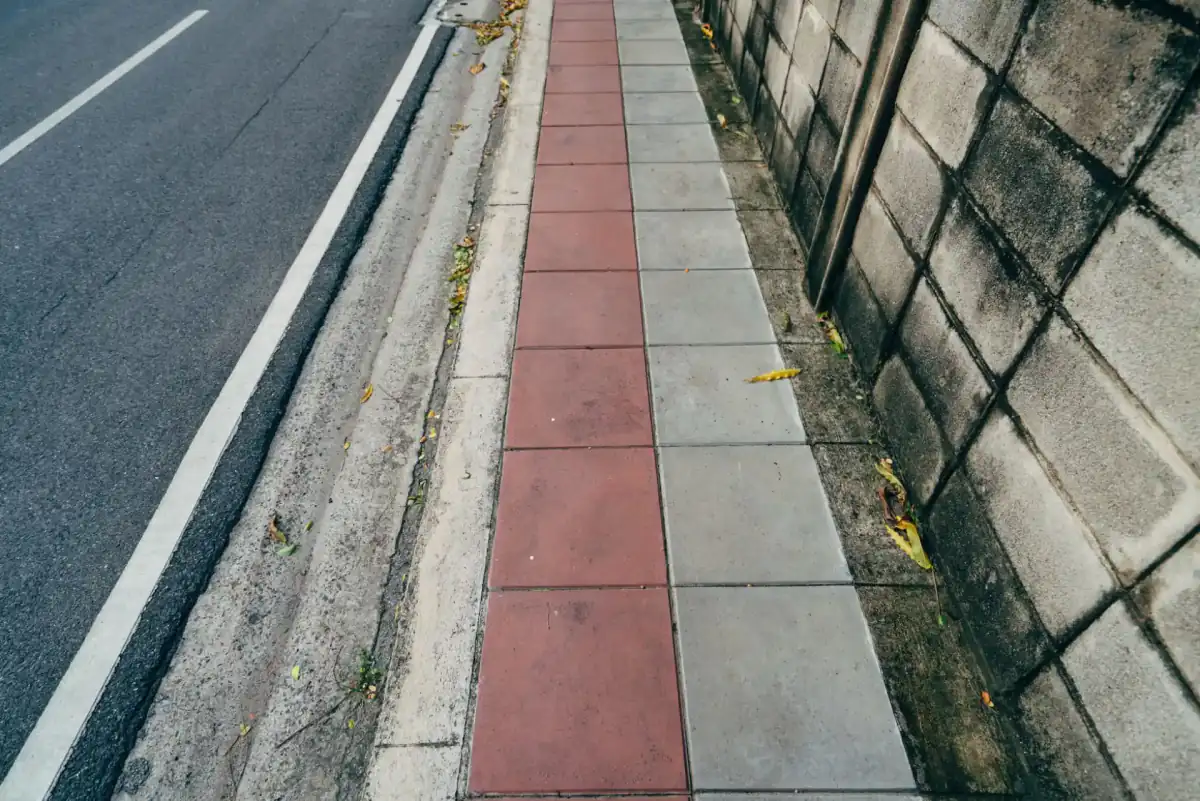
Concrete Sidewalks in Madison, WI — Residential & Commercial Walkway Specialists
New sidewalks, garden paths, front walks and replacement of cracked or heaved sections across Dane, Rock, Columbia and Jefferson Counties.
Concrete Sidewalks & Walkways in Madison, WI
Madison Elite Concrete is your local resource for concrete sidewalks and walkways throughout Madison, Dane County and the surrounding area. We help homeowners and property owners connect with experienced local flatwork crews who know which side of the property line a walk sits on before they quote it.
A residential sidewalk is four inches of air-entrained concrete over four inches of compacted base, with control joints cut at roughly the width of the walk — so a four-foot walk gets joints about every four feet. That spacing is closer than a patio's because a narrow slab has less room to distribute movement, and because a heaved or cracked walk is a trip hazard rather than an inconvenience. Four inches is enough for foot traffic. Where a walk crosses a driveway or anywhere a vehicle can run a wheel over it, it needs to be thickened to five or six inches, and that transition should be shown on the estimate.
The more consequential question on a Madison walk is where it sits. A path from the back door to the garage is private work. The terrace sidewalk running parallel to the street is in the public right-of-way, and that changes everything about the job — the City of Madison requires contractors working in the right-of-way to be prequalified before a permit is issued through the Engineering Division, the replacement has to grade to the neighbouring squares rather than to whatever elevation suits your yard, and the city standards govern rather than your preferences. Fitchburg, Middleton, Sun Prairie and Verona each handle this differently. It is worth establishing which category your walk falls into before comparing quotes, because a bid that has not accounted for right-of-way scope is not comparable to one that has.
What’s Included in a Madison Concrete Sidewalks & Walkways Quote
- On-site measurement and a clear determination of what is private walk and what sits in the public right-of-way
- Layout of the route, width and elevations, including how the walk meets the stoop, the drive and the neighbouring squares
- Saw-cutting and removal of the sections being replaced, with clean vertical edges at the joints rather than broken ones
- Excavation, subgrade compaction in lifts, and dense-graded base course to a depth set by the soil
- Forming to line and grade, with cross-slope set to shed water off the walk rather than hold it
- Fiber mesh or #4 rebar on chairs where the walk crosses a drive, spans backfill, or carries vehicle traffic
- Air-entrained mix appropriate to Wisconsin freeze-thaw exposure, with slump controlled at the truck
- Broom finish run across the direction of travel, which is what gives traction on a wet or icy walk
- Isolation joints where the walk meets a stoop, a foundation wall, a driveway or an existing slab
- Saw-cut control joints at a quarter of slab depth, spaced to the width of the walk, cut within the first day
- Restoration of the disturbed terrace or lawn area, and removal of forms, stakes and spoil

Concrete Sidewalk & Walkway Installation in Madison, WI
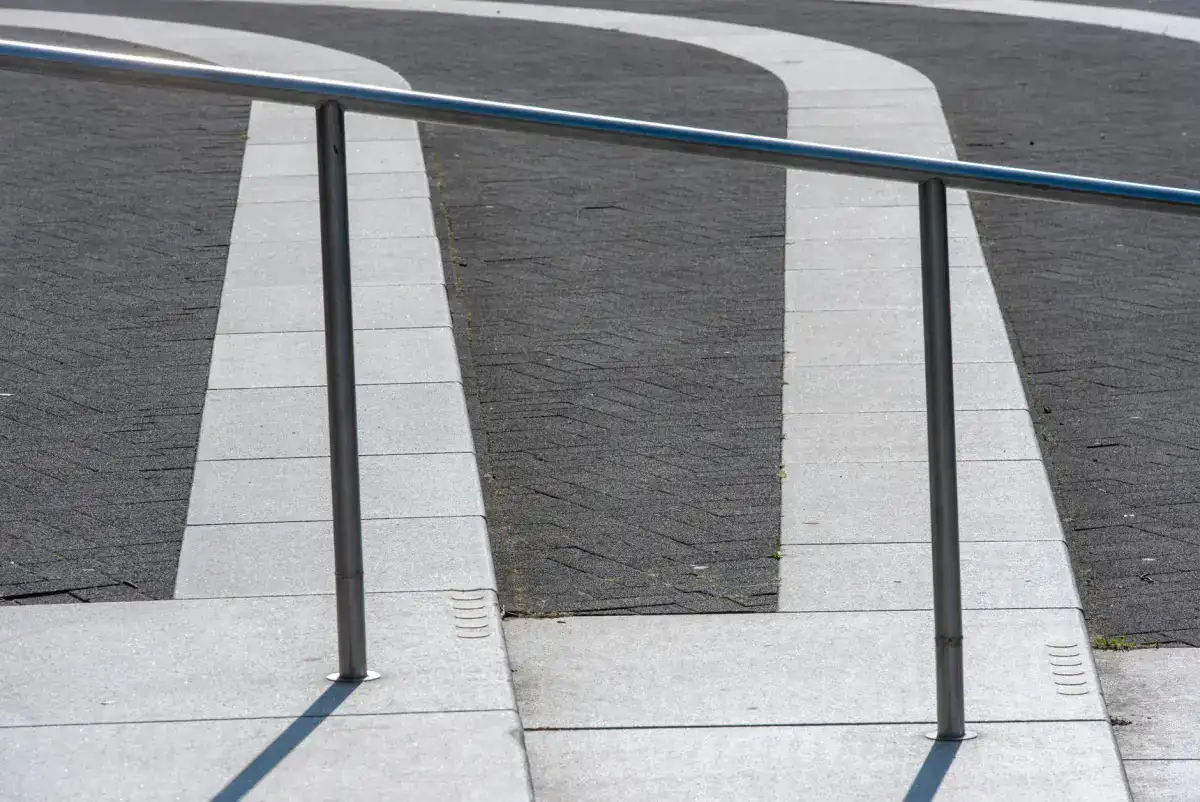
Residential Concrete Sidewalks
The front walk from the street or the driveway to the entry, and the terrace sidewalk running along the street. These are not the same job even though they look continuous. The section inside your property line is private work you specify. The section in the right-of-way is city-governed: it has to match the standard width and thickness, it has to grade to the squares on either side so there is no lip at the neighbour's property line, and the contractor has to be prequalified with the City of Madison before a permit is issued. A Nakoma terrace walk that has to meet the grade of the neighbour's square is a different problem from a walk you are free to set at whatever elevation you like, and pricing that does not distinguish between them is worth questioning.
Concrete Walkways & Paths
Private paths — side yard routes to the back gate, a walk from the patio to a detached garage, a path around a garden bed to a shed. Here you set the width, the route and the elevations, and the practical considerations are different from a front walk. Width is the one people cut too fine: a three-foot path handles one person comfortably and two people not at all, and it is barely wide enough to get a wheelbarrow or a snowblower down. Route matters because a path that ignores where people actually walk gets ignored, and the grass beside it wears into a track. Drainage matters because a side yard between two houses is often the lowest, wettest ground on the lot, so the walk needs a cross-slope and somewhere for the water to go.
Sidewalk Replacement
Taking out sections that have failed and pouring new ones. The first decision is how many squares to replace, and it should be made by looking rather than by counting. A single cracked square in an otherwise sound run is a single square replacement. A run where every third square has moved usually has a base or a tree root problem underneath that will keep producing failures until it is addressed. Removal is where that gets diagnosed. Cuts are made at existing joints so the new work meets the old on a clean vertical edge, not a broken one. Where a walk sits in the right-of-way, the number of squares being replaced can change which permit applies, which is a reason to establish the scope with the city before the saw comes out.
Cracked & Uneven Sidewalk Replacement
A raised edge between two sidewalk squares is a trip hazard, and on a terrace walk it is one the property owner generally carries responsibility for. There are two mechanisms and they need different answers. Frost heave lifts a slab in winter and it often settles back, which produces a walk that moves seasonally — the fix is base and drainage, because the water under the slab is what freezes. Root heave from a mature street tree lifts a slab permanently and progressively, and replacing the concrete without addressing the root simply resets the clock. On Madison's older streets with large terrace trees, that trade-off has to be discussed honestly, because the tree is often protected and the root cannot simply be cut. Sometimes the correct answer is a replacement detailed to work around the root rather than through it.
Decorative Concrete Walkways
Front walks are the most-viewed concrete on most properties, which makes them a reasonable place to spend on finish. The realistic options are integral color, exposed aggregate, a salt finish, a stamped border with a plain field, or saw-cut scoring that turns the control joints into a deliberate pattern. Scale is the constraint. Walks are narrow, so a large stamp pattern shows only a fraction of its repeat across the width and reads as cut off — smaller patterns, borders, or texture rather than pattern generally work better. Traction is the other constraint, and it outranks appearance on a walk that will be used in February. A heavily sealed decorative walk can be genuinely slick, so the sealer needs to be specified with winter in mind, ideally with a grit additive.
Sidewalk Replacement vs. Lifting a Settled Square
Replace the Section
The right call when the slab is cracked through, has heaved out of plane, or is spalled across most of its surface. Replacement lets the base and the cause be corrected — the root, the soft spot, the water — rather than reset. It costs more than lifting and it is the only option that actually fixes the reason the square moved.
Lift and Level the Section
Worth considering when the concrete itself is sound and has simply settled — no through-cracks, no surface loss, just a slab sitting low. Lifting is faster, cheaper and usable almost immediately. It does not help a slab that is broken, and it does not remove a root that will lift it again next year.
Signs You Need Concrete Sidewalks & Walkways
- A raised lip between squares that catches a toe — the definition of a trip hazard, and a liability on a public walk
- Cracks running the full depth of a square rather than surface crazing
- Squares rocking underfoot, which means the slab has lost support underneath
- Water standing on the walk, or running toward the house rather than off the edge
- Surface flaking and shedding grit, which is scaling and usually traces back to de-icing salt
- A path worn into the grass beside the walk, meaning the route no longer matches how people actually move
How Concrete Sidewalks & Walkways Works
- 1
Scope, Property Line and Permit Check
The first thing established on site is which side of the property line each section sits on, because that decides who governs the work. Private walks are specified by the owner. Anything in the public right-of-way — the terrace sidewalk, the section crossing the driveway approach — falls under city standards, and in Madison the contractor doing it has to be prequalified with the city before a street terrace permit is issued through the Engineering Division. That permit process also affects sequencing and how much of the walk can be out of service at once. Requirements differ in Fitchburg, Middleton, Sun Prairie and Verona, so this gets confirmed rather than assumed. Alongside that, the visit establishes the route, the width, the elevations at fixed points, and — on a replacement — how many squares are actually failing versus how many simply look tired.
- 2
Saw-Cutting, Removal and Diagnosis
Sections coming out get saw-cut at existing joints first, so the remaining concrete is left with a clean vertical edge rather than a ragged break that will spall later. Then the old slab comes out and the subgrade gets examined, which is the most useful moment in the job. A settled square usually reveals loose fill, a washed-out void where a downspout has been discharging, or a utility trench that was backfilled without compaction. A heaved square usually reveals either a tree root or ground that holds water and freezes. The distinction matters because it determines the repair. Cutting a root is sometimes possible and sometimes not — mature terrace trees on Madison's older streets are frequently protected, and the honest answer may be to detail the new walk around the root rather than remove it.
- 3
Base, Forming and Reinforcement
The exposed subgrade is stripped of organics and compacted in lifts, then dense-graded base course goes down and gets compacted and graded. Depth is set by what was found during removal, not by a default number — a walk that failed because of a void under it needs more attention here than one being replaced for cosmetic reasons. Forms are set to line and grade. Two slopes are being controlled at once: the length of the walk, which follows the site, and the cross-slope, which sheds water off the side rather than letting it pond. On a right-of-way walk both are constrained by city standards and by the elevation of the neighbouring squares. Reinforcement is fiber mesh for a typical residential walk, with #4 rebar on chairs and increased thickness anywhere a vehicle can cross the walk, particularly at the driveway.
- 4
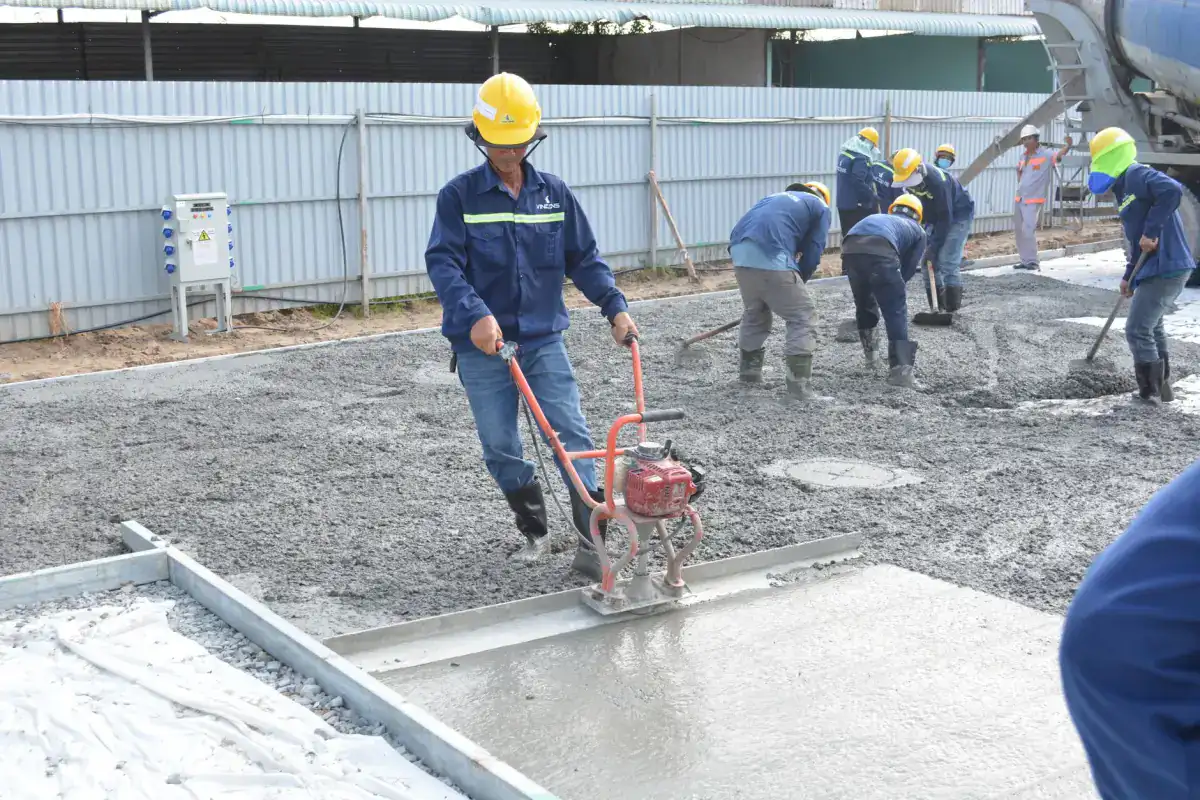
Pour, Broom Finish, Joints and Restoration
Concrete goes in air-entrained for freeze-thaw exposure, screeded to the forms and floated, then left until the bleed water is gone before anything else touches it. Edges get tooled. The broom finish is run across the direction of travel rather than along it, which is the detail that gives a wet or icy walk its grip — a broom run lengthwise channels water down the walk and gives less traction underfoot. Saw-cut control joints follow within the first day at about a quarter of slab depth, spaced at roughly the width of the walk, and set to align with the squares on either side rather than starting a new rhythm. Isolation joints separate the walk from the stoop, the drive and any foundation. Then the terrace or lawn gets restored and the first-winter instruction gets handed over: no de-icing salt on new concrete.
What Do Concrete Sidewalks Cost in Madison, WI?
- Linear footage and width, and how many separate sections the work is split across
- Whether the walk is private or in the public right-of-way, which brings permitting, standards and restoration requirements
- Removal and disposal of existing concrete, priced by volume and by how easily a machine can reach it
- What the removal exposes — voids, loose trench backfill, roots and soft spots all add base work
- Thickness and reinforcement, since a walk crossing a driveway needs more of both than one carrying only foot traffic
- Tree roots, which can turn a straightforward replacement into a design problem, particularly under mature terrace trees
- Finish: broom is the baseline, and integral color, exposed aggregate, borders or scoring each add cost
- Restoration of terrace, lawn or landscaping disturbed during the work
Sidewalk pricing looks simple per linear foot and rarely is, because the two variables that move it most are scope and location. A quote for four squares is not comparable to a quote for the whole run, and a quote that treats a terrace walk as private work has not priced the permit, the standards or the restoration that come with the right-of-way. Ask every estimate to state which sections are in the right-of-way, the thickness and reinforcement where the walk crosses the drive, and what happens if a root or a void turns up during removal.
What to Look for in a Madison Concrete Sidewalk Contractor
The Property Line Established First
A contractor who identifies which sections sit in the public right-of-way before quoting is telling you they have done this work in Madison. One who does not is likely to discover it mid-job, and the discovery costs you.
Clean Saw Cuts at the Joints
Sections being replaced should be cut out, not broken out. A ragged edge on the remaining concrete spalls within a few winters, which turns a four-square repair into a six-square repair later.
The Cause Named, Not Just the Symptom
A square that heaved did it for a reason — water, a root, a void. Removal exposes which. Expect to be told what was found, because replacing the concrete without addressing the cause resets the clock rather than stopping it.
A Broom Finish Run the Right Direction
Across the walk, not along it. It is a small detail that decides how a wet walk behaves in February, and it is a reliable indicator of whether a crew is thinking about the finished surface or just the pour.
Residential & Commercial Concrete Sidewalks & Walkways
Residential
Front walks, terrace sidewalk replacement, side paths and garden routes on lots from the older streets around Monroe Street and Atwood to newer subdivisions in Waunakee and Cottage Grove. Older streets bring mature terrace trees and right-of-way constraints; newer ones bring backfilled ground that decides the base depth.
Commercial
Walks and connecting paths for apartment buildings, small retail properties and offices, where the questions shift toward traffic volume, winter maintenance, scheduling around business hours and keeping a usable route open while sections are out of service. Accessibility scope is discussed as something to specify with your design team, not assumed.
When Concrete Sidewalks & Walkways Isn’t the Right Call
- If the failed section is terrace sidewalk that the City of Madison has already scheduled for repair or replacement, do not pay to have it done privately. Confirm with City Engineering before signing anything.
- If a single square has settled but the concrete itself is sound and unbroken, replacement is more scope than the problem needs. Ask about lifting and levelling it instead.
- If a mature terrace tree is the cause and the root cannot be cut, replacing the walk without a plan for the root buys you a few years and the same problem again. That conversation should happen before the quote, not after.
- If your property is outside Dane, Rock, Columbia and Jefferson Counties, a contractor closer to you will price and schedule this better than one travelling to reach it.
- If the walk is cosmetically tired but structurally sound, flat and safe underfoot, there is no urgency here. Spend the money on something that is actually failing.
Frequently Asked Questions
- Who is responsible for the sidewalk in front of my house in Madison?
- The terrace sidewalk sits in the public right-of-way, which is city property, but responsibility for its condition and for the cost of repair commonly falls to the adjoining property owner — and the specifics depend on the municipality and the circumstances. What is consistent is that you cannot simply hire anyone to work on it. The City of Madison requires contractors performing right-of-way work to be prequalified, and a permit is issued through the Engineering Division. Confirm with the city what applies to your address before commissioning work.
- How thick should a residential sidewalk be?
- Four inches over about four inches of compacted base is standard for a walk carrying foot traffic. That changes where vehicles can cross it. Any section a car drives over — most commonly where the walk crosses the driveway — should be thickened to five or six inches and reinforced, because a four-inch slab under a wheel load cracks. That transition is worth confirming on the estimate, since it is a common place for a bid to be quietly thinner than a competitor's.
- Why does my sidewalk keep heaving every winter?
- Water under the slab freezing and expanding. Frost heave lifts the concrete in winter and it usually settles back in spring, which produces a walk that moves seasonally rather than one that is permanently displaced. The cause is under the slab, not in it, so the fix is drainage and base — a well-drained granular base gives the water somewhere to go instead of holding it against the concrete. If the movement is permanent and progressive rather than seasonal, suspect a tree root instead.
- Can a sunken sidewalk square be raised instead of replaced?
- Often yes, and it is worth asking about. Where the concrete itself is sound — no through-cracks, no surface loss, just a slab sitting low — lifting and levelling restores the surface faster and for less than replacement, and the walk is usable almost immediately. Where the square is broken, spalled, or has been lifted by a root that will lift it again, replacement is the answer that actually addresses the problem. A contractor who offers both options and explains which applies is giving you a real assessment.
- How far apart should control joints be on a sidewalk?
- Roughly at the width of the walk, so a four-foot walk gets joints about every four feet. That is closer spacing than a patio or driveway, because a narrow slab has less width to distribute stress across. The cuts need to be about a quarter of the slab depth and made within the first day. On a replacement, the joints in the new work should line up with the squares on either side rather than starting their own rhythm, otherwise the run reads as patched.
- Do I need a permit to replace my sidewalk in Madison?
- For a walk in the public right-of-way, yes. The City of Madison issues a street terrace permit through the Engineering Division covering work including sidewalk replacement, and the amount of work involved can affect which permitting applies. Contractors performing right-of-way work must be prequalified with the city. A purely private path within your property line is a different matter. Since Fitchburg, Middleton, Sun Prairie and Verona each set their own requirements, confirm your specific address rather than relying on what applies elsewhere in the county.
Learn More
- City of Madison — Street Terrace Alterations — The city's guidance on sidewalk, terrace and drive apron work in the public right-of-way, including what requires a permit and who may perform it.
- City of Madison — Public Right of Way — City Engineering's explanation of what the right-of-way is and how far it typically extends onto what most homeowners think of as their front yard.
- NRMCA — CIP 2: Scaling Concrete Surfaces — Why walks flake and shed grit, and why de-icing salt on a first-winter slab is the most common cause in this climate.
Need Concrete Sidewalks & Walkways in Madison, WI?
Tell us what’s going on and get an on-site estimate — no charge for the visit, and no obligation to book the work.
Get My Free Estimate