MADISON ELITEConcrete Contracting
Concrete Contractor — Monona, WI

Concrete Contractor in Monona, WI

Residential and commercial concrete across Monona: driveways, patios, stamped and decorative work, slabs, sidewalks, steps and repair. Base and joint layout decided before anyone talks about a finish.

Let Us Help You Today

Full Name
Phone Number
Email Address
Zip Code

By submitting this form, you authorize Madison Elite Concrete to share the information you provide with one or more independent local professionals who may be able to assist with your project. These providers may contact you by phone, email, or text regarding your project. While we may prioritize licensed and insured professionals where available, you are responsible for verifying all credentials before hiring a contractor.

Madison Elite Concrete is your local resource for concrete work throughout Monona and the rest of Dane County. We help homeowners and property owners connect with experienced concrete contractors who plan the base and the joint layout before the first truck is scheduled.

Almost every concrete job in Monona is a replacement. The city built out in one concentrated burst in the middle of the last century, which means its driveways, walks and stoops were largely poured within the same window and are reaching the end of their service lives together.

That has a practical consequence people do not expect: the original driveways here were sized for the cars of the period, and a single-width drive that suited a 1958 sedan does not suit a modern vehicle. Widening is as common a request as straight replacement, and it is a different job — the new strip is a separate slab, so the joint between old and new gets planned rather than butted.

The specification for the new work is current: four inches of compacted dense-graded base under residential flatwork, five to six inches of slab where a vehicle parks, 4,000 psi air-entrained mix for freeze-thaw exposure, and joints saw-cut within the first day at a quarter of the slab depth.

Concrete contractors finishing a freshly poured slab in Dane County, Wisconsin
Services

Concrete Services in Monona, WI

Residential and commercial work across Monona. Every estimate is given on site, after someone has looked at the ground. Worth getting more than one number: ask each concrete company you talk to in Monona to state slab thickness, base depth, reinforcement type and joint spacing, and the quotes finally become comparable.

1

Concrete Driveways in Monona, WI

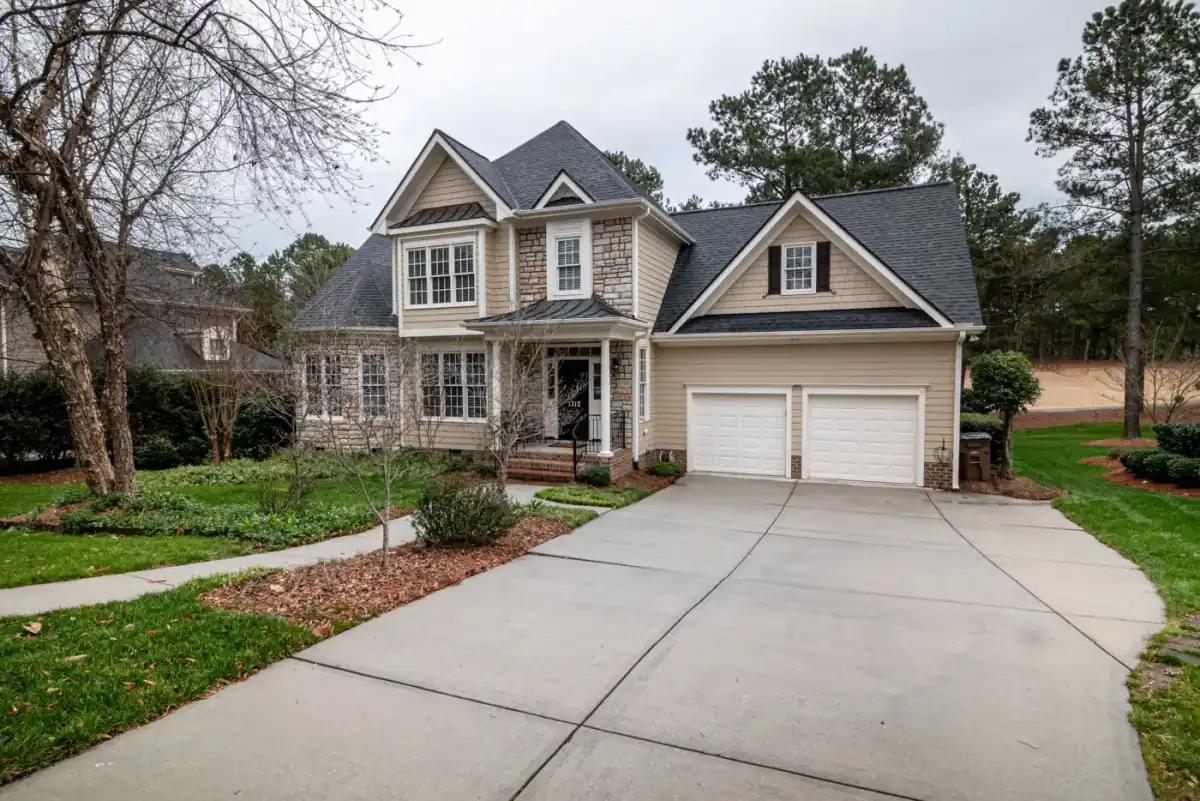
A driveway is decided at the base, not at the finish. Four inches of compacted dense-graded base goes under residential flatwork, placed and compacted in lifts rather than dumped and rolled once, and the slab runs four inches through the field and five to six inches where vehicles actually sit and turn. Reinforcement is a real choice: #4 bar on chairs where the load or the subgrade calls for it, fiber mesh where it does not, and the estimate should say which. Saw-cut control joints go in within the first day at a quarter of the slab depth, spaced in feet at roughly two to three times the slab thickness in inches, and lined up with the garage door and the approach. Where a driveway meets the street, the approach sits in the public right-of-way and carries its own municipal standards. Widening a narrow mid-century Monona driveway is the most common driveway job here, and the joint between the original slab and the new strip is planned rather than poured tight.
2

Concrete Patios in Monona, WI

Slope comes first. A patio is graded away from the house before anyone talks about a finish, because a flat patio against a foundation is a drainage problem that no sealer fixes. Joint layout is the second decision: cuts land on panel edges and line up with a door or a post rather than running across the middle of the seating area. Four inches over compacted base handles foot traffic and furniture. Finish options are broom, exposed aggregate, salt finish or integral color, and the broom direction is chosen so it sheds water rather than trapping it. Air entrainment matters on anything exposed here — a patio takes the same freeze-thaw cycling a driveway does, minus the salt.

3

Stamped Concrete in Monona, WI

Stamped work lives or dies on the joint layout. A control joint running through the middle of a fake flagstone is the tell that gives the whole thing away, so the cut lines get planned against the stamp pattern before the pour, not after. Ashlar slate, random stone, cobblestone and wood plank are the patterns that come up most. Color is either integral, mixed at the truck and consistent through the slab, or a color hardener broadcast and troweled in with a release powder for depth — they cost differently and they age differently, and that trade-off belongs in the estimate. Stamped surfaces need sealing on a real interval, and the first winter is the one where de-icing salt does the most damage.

Also see: decorative concrete.

4

Concrete Slabs in Monona, WI

Slab work covers garage floors, shed and outbuilding pads, hot tub bases, shop floors and addition slabs, and each one has a different spec. Anything a vehicle parks on wants five to six inches. Anything heated or enclosed wants a vapor barrier under it, because a slab poured straight onto base course will move moisture up into whatever gets laid on top of it later. Anchor bolt placement and edge thickening get set before the pour when a wall lands on the slab. Base preparation is the same discipline as a driveway: compacted in lifts, checked for grade, and not poured over frozen or saturated ground.

Also see: garage floors.

5

Concrete Sidewalks & Walkways in Monona, WI

Four inches over compacted base is the standard for a walk, and the grade has to meet the neighboring square without a lip. Public sidewalk in the terrace is a different animal from a private walk to the front door: the terrace sits in the right-of-way, so it carries municipal standards and permit requirements that a private path to a garden bed does not, and which side of that line a given section falls on gets established before the estimate rather than after the forms are set. Joint spacing on a walk usually lands at panel widths that match what is already there, so a replacement square reads as part of the run instead of a patch.

6

Concrete Steps in Monona, WI

Steps are a footing job with a finish on top. The footing goes below frost penetration or at least 48 inches below adjacent grade, whichever is deeper — that is Wisconsin's residential code minimum, and it is the single reason most front stoops in this area heave. Riser height and tread depth stay consistent across the flight, because an inch of variation between two risers is a trip hazard people find with their toes. The landing gets pitched away from the door. Where steps meet an existing walk or approach, the joint between old and new is planned rather than butted, so the two are allowed to move independently. Stoops poured before the 48-inch footing rule was routinely enforced are the reason so many Monona front entries have separated from the house.

7

Concrete Repair in Monona, WI

Repair starts with an honest read on whether the slab is worth saving. Surface scaling from de-icing salt, spalling, pop-outs and crazing are finish-layer problems and often repairable. A slab that has cracked into more than a few pieces, settled unevenly across a joint, or lost its base underneath is a replacement, and an overlay laid on top of it will telegraph every one of those cracks back through within a season or two. Where the slab is sound and the ground under it is not, slab lifting can bring a settled panel back to grade for a fraction of a tear-out. Routing and sealing a working crack keeps water out of the base, which is what turns a hairline into a heave. Flatwork of this age usually fails at the base rather than the surface, so an overlay would copy the problem onto a new finish instead of solving it.

Also see: resurfacing, concrete removal.

8

Residential Concrete in Monona, WI

Beyond the flatwork most people call about, residential work covers garage floors, basement and addition foundations, resurfacing over sound slabs, decorative finishes, and removal and haul-away of what is already there. Residential jobs are usually decided by access as much as by spec: a mixer that cannot reach the back yard means a line pump, and a line pump changes the price before a single detail of the finish has been discussed. Occupied houses also set the schedule — a driveway replacement takes the driveway out of service for the cure, and that gets planned around rather than discovered on day one.

Also see: garage floors, foundations, resurfacing, decorative concrete, removal.

9

Commercial Concrete in Monona, WI

Commercial flatwork is specified heavier and phased tighter. Parking lots, drive lanes, loading docks, dumpster pads and approach aprons carry truck loads rather than car loads, which moves slab thickness, base depth and reinforcement well past residential numbers, and the joint layout has to account for where the wheel paths actually run. Frontage sidewalks and entrances usually have accessible-route requirements attached, so slope and cross-slope are specification items rather than judgment calls. Most commercial work gets phased so the property stays open — half a lot at a time, or overnight and weekend pours — and that phasing plan belongs in the bid rather than in a conversation on the first morning.

Also see: parking lots, commercial slabs, commercial sidewalks, commercial repair, commercial foundations.

What to Expect

Everything That Decides How Long a Slab Lasts Happens Before the Pour

A phone number and a truck in the driveway don't make a company. Here's what's actually different about a concrete job in Monona.

  • Base and Reinforcement Stated on the Estimate

    Four inches of compacted dense-graded base under residential flatwork, five to six inches of concrete where a vehicle parks, and #4 bar on chairs where the load calls for it rather than fiber mesh everywhere. Ask every quote you get to state slab thickness, base depth, reinforcement type and joint spacing, and the numbers finally become comparable.

  • Joint Layout Planned, Not Improvised

    Saw-cut control joints go in within the first day at a quarter of the slab depth, spaced in feet at roughly two to three times the slab thickness in inches, and lined up with a column, a door or a panel edge. A control joint is where the slab was told to crack. Skip it and the slab picks.

  • Right-of-Way Scope Identified Up Front

    The terrace sidewalk, the driveway approach and any curb cut sit in the public right-of-way rather than on your property, and they carry permit requirements and city standards that private flatwork does not. Which sections of a job fall inside that line gets established before the estimate, not discovered after the forms are set.

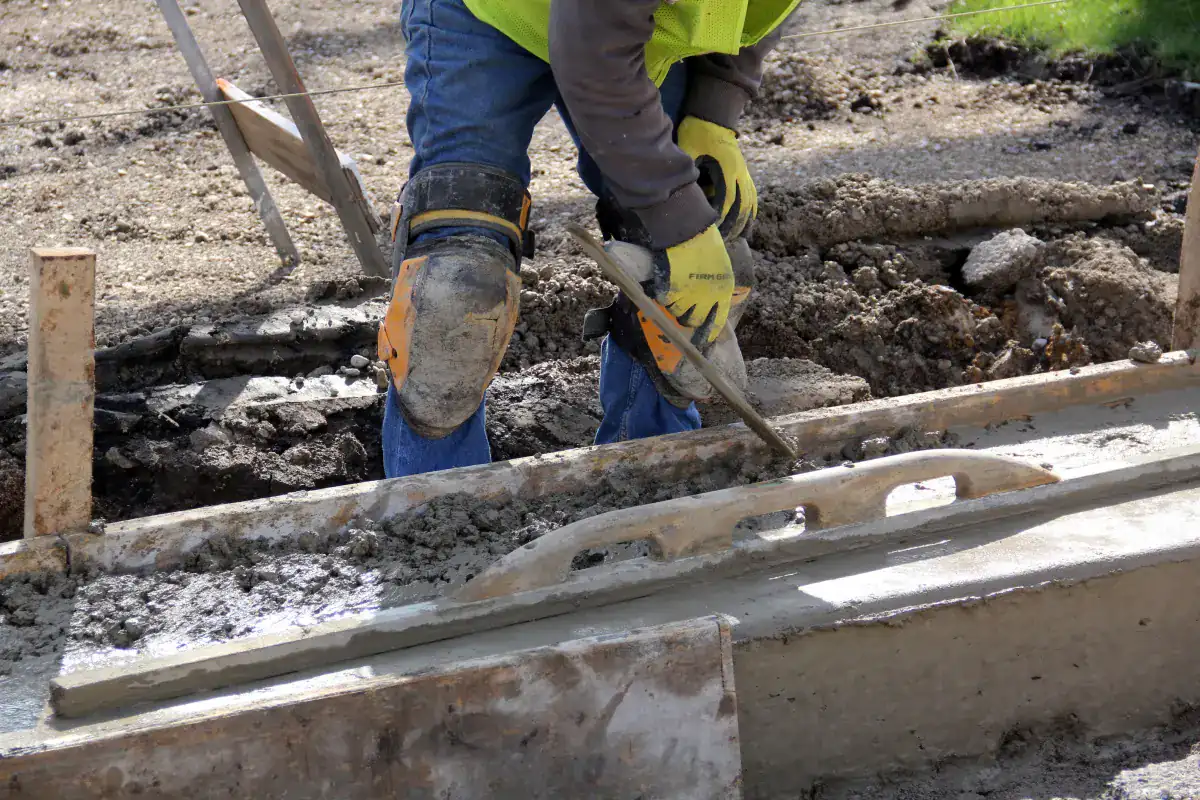
Concrete finisher shaping the edge of a fresh flatwork pour against the form board
(000) 000-0000
Monona Conditions

What Concrete Work Looks Like in Monona, WI

  • Mid-Century Flatwork at End of Life

    Monona's housing stock is dominated by one building era, and its original concrete is now sixty-odd years old. At that age the failures are structural rather than cosmetic: base washed out from under a panel, joints that have opened and let water in, stoops that were never footed to current depth. Resurfacing any of that produces a good-looking slab sitting on the same failed base, and it comes back through within a season or two.

  • Narrow Original Driveways

    Drives poured for mid-century cars are frequently too narrow for what people park on them now. Widening works, with two caveats. The added strip is a separate slab and will move independently, so the joint between them is designed rather than incidental. And the base under the new width has to be built to the same standard as the old, or the two halves settle at different rates and the seam opens.

  • Lake Monona Shoreline Lots

    Properties running down toward the lake have both grade and a water table to contend with. The grade decides whether a walk is sloped or stepped and where a patio can sit. The water table decides how a footing excavation behaves. On the lowest lots those two interact, and the drainage plan gets made alongside the slab rather than after it.

  • The Monona Drive Corridor

    Commercial concrete in the city concentrates along Monona Drive and the Beltline frontage. Frontage walks and entrances there carry accessible-route slope requirements, so cross-slope is a specification item, and the parking areas take delivery-truck loads that push thickness and base depth past residential numbers.

Pricing

What Does Concrete Work Cost in Monona, WI?

Start from the published ranges below, then expect the site to move them. In Monona the subgrade, the access and the drainage decide more of the final number than the square footage does. Any concrete company willing to give you a firm price off a satellite image is quoting the square footage and guessing at everything that actually matters.

ServiceCost Per Sq. Ft.Typical Job
Concrete Driveway (plain)$5 – $8$3,200 – $5,120
Concrete Patio (broom finish)$5 – $8$1,440 – $2,304
Slab / Garage Floor$6.50 – $10.50$2,600 – $4,200
Sidewalks & Walkways$6 – $12$840 – $1,680
Stamped Concrete Patio$10 – $20$2,880 – $5,760
Stamped Concrete Driveway$10 – $20$6,400 – $12,800

ConcreteNetwork.com 2026 national cost guides. Typical-job figures apply each range to the baseline sizes those guides use: a 640 sq. ft. two-car driveway (16 × 40), a 288 sq. ft. patio, a 400 sq. ft. two-car garage slab, and a 140 sq. ft. walk (4 × 35). In Dane County the subgrade and truck access move the number further than square footage does — a real price comes after someone stands on the job.

Local Area

About Monona

  • Village in 1938, City in 1969

    Monona incorporated as a village on 29 August 1938, when the area was still mostly farmland and summer homes, and became a city in 1969. In between, during the 1950s alone, its population went from 2,544 to 8,178. That single decade of growth is why so much of the city's concrete shares a birthday, and why replacement work here tends to arrive street by street.

  • Protected Mound Sites

    Three pre-Columbian mounds in Monona are on the National Register, including the Monona Mound, which was the first mound protected under Wisconsin's Burial Sites Preservation Act. Indian Mounds Park at Midwood and Ridgewood Avenues holds another. Recorded burial sites carry statutory protection, so excavation near one is a question for the city before the digging starts.

Nearby

Concrete Contractors in Cities Near Monona

The same concrete company coverage runs across Dane, Rock, Columbia & Jefferson Counties. Each city page below covers the local conditions that change the work there.

Who This Isn't For

When We’re Not the Right Call

Common Questions

Frequently Asked Questions

Do you serve Monona, WI?
Yes. Monona is about 2.9 miles east-southeast of Madison and is effectively surrounded by it — the closest city on the whole service-area list, and covered constantly.
My driveway is sixty years old. Repair or replace?
At that age, usually replace, and it is worth being direct about it. Concrete of that vintage in this climate has taken sixty winters of freeze-thaw and de-icing salt, and the failures are typically in the base rather than the surface. Resurfacing gives you a new-looking slab on the same failed foundation, and the cracks telegraph back through within a couple of seasons. If a contractor offers an overlay on a slab like that without opening the ground first, get another opinion.
Can I widen my driveway without replacing all of it?
Yes, provided the existing slab is sound. The added strip is its own slab: it gets a planned joint against the original rather than being poured tight, and its base has to be built to the same standard so the two halves do not settle differently. Where the existing drive is already cracked or has settled panels, widening it means putting new work next to a failure, and replacing the whole thing usually costs less than doing it twice.
What does driveway replacement cost in Monona?
Plain concrete runs roughly $5 to $8 per square foot on ConcreteNetwork's 2026 guide, so a 640 square foot two-car driveway is about $3,200 to $5,120 before extras. Replacement adds removal and haul-away of the old slab, which is a real line item rather than a rounding error, and on a mid-century lot the base often needs rebuilding rather than reusing.
How long will I be without my driveway?
Longer than the pour takes. Removal, base work and forming happen before any concrete arrives, and then the slab needs days rather than hours before it takes vehicle traffic. Plan for the driveway to be out of service for the better part of a week, and settle the parking arrangements before the work starts rather than on the first morning.

Learn More

  • Wisconsin SPS 321.16 — Footing Depth The state code provision requiring footings, including those for landings and stoops, to be placed below the frost penetration level or at least 48 inches below adjacent grade, whichever is deeper.
  • NRMCA — CIP 2: Scaling Concrete Surfaces The National Ready Mixed Concrete Association's bulletin on why exterior slabs scale, and how finishing practice, air content and de-icing salt each contribute to it.
  • NRMCA — Guide to Concrete Specification What a concrete specification should actually state — strength, air content, slump and placement requirements — which is the reference for asking any quote to put its numbers in writing.
Back to top

Need a Concrete Contractor in Monona, WI?

Tell us what’s going on and get an immediate on-site quote — no charge for the estimate, and no obligation to book it.

Get My Free Estimate